


Table of Contents
Why Back Pain Persists Even After Treatment
How Massage Therapy and Physical Therapy Address Back Pain Differently
What Massage Therapy Targets
What Physical Therapy Targets
The Real Benefit of Combining Both Approaches
Back Pain After Physical Therapy: When to Add Massage
Massage After Physical Therapy: Coordination and Timing
How Long Does Massage Help Back Pain and What to Track
Building a Coordinated Treatment Plan
Conclusion: Your Body Is Giving You Information
Frequently Asked Questions
Why Back Pain Persists Even After Treatment
You finish physical therapy. The exercises were consistent. You showed up to appointments. Many people have this experience, which raises a crucial question: what's actually missing when massage therapy and physical therapy for back pain treatment doesn't fully resolve?
Back pain rarely has a single cause. It's usually a combination of things, tension patterns held in muscle tissue, movement habits that reinforce the problem, fascia that's become restricted, alignment patterns that load certain structures repeatedly, and sometimes dietary or lifestyle factors that amplify inflammation.
I see this pattern regularly. People arrive saying they've done PT, they've done everything right, yet the pain remains. The missing piece isn't usually effort or discipline.
Key Takeaway: Back pain persists when treatment focuses narrowly on one structure or system. The body is interconnected. Addressing only strength or only mobility leaves other contributors untouched.
How Massage Therapy and Physical Therapy Address Back Pain Differently
These two approaches work through different mechanisms. Understanding what each does, and what each misses, is the foundation for knowing whether combining them makes sense for your situation.
What Massage Therapy Targets
Therapeutic massage addresses the soft tissue directly. Muscles, fascia, and connective tissue can become restricted, knotted, and adhesed. When tissue is tight, it limits movement, traps nerves, and sends constant signals of tension to the nervous system.
Massage also improves blood circulation and nutrient delivery to tissues. Restricted tissue is often poorly perfused. Movement of fluid through the area supports healing.
Myofascial release, one approach within massage therapy, specifically targets the fascia, the connective tissue web that surrounds and interpenetrates every structure in the body. Fascia can become dehydrated and sticky, restricting movement and amplifying pain signals. Releasing fascia changes how the whole system functions, not just the local area.
What Physical Therapy Targets
Physical therapy focuses on movement, strength, and function (Becoming a Physical Therapist). A PT assesses how you move, identifies weaknesses or imbalances, and prescribes exercises to address them. The goal is to restore your ability to perform activities without pain. This requires active participation.
Physical therapy also addresses movement patterns and body mechanics. If you've been protecting an area or moving in a way that perpetuates the problem, PT teaches you to move differently. This retraining is essential.
The limitation of PT alone is that it assumes the tissue is ready to move and strengthen. If soft tissue is severely restricted, if the nervous system is in protective mode, or if alignment is significantly off, the exercises may feel ineffective or even aggravate the area.
The Real Benefit of Combining Both Approaches
When coordinated, massage therapy and physical therapy for back pain treatment addresses different pieces of the same puzzle. Massage prepares the tissue by releasing restrictions, calming the nervous system, and improving circulation.
Then physical therapy teaches the body how to move and function in this newly released state. The exercises reinforce the changes. They build strength in patterns that support better alignment and function.
The sequence matters. Trying to strengthen a severely restricted muscle often doesn't work well. The muscle can't access its full range or contract properly if fascia is stuck.
This combined approach also addresses the nervous system more completely. Massage calms the protective responses. PT rebuilds confidence in movement through graduated, controlled exercise. Together, they tell the nervous system that the area is safe and functional.
Pro Tip: The most effective treatment plan sequences the work. Release restrictions first. Then train movement patterns. This order matters because tissue that's restricted can't move or strengthen effectively.
Back Pain After Physical Therapy: When to Add Massage
You've completed physical therapy. You did the work. But the pain is still there, or it improved only partially. This is the moment to ask: what wasn't addressed? If the pain remains despite consistent PT, soft tissue restriction is often the culprit. Physical therapy assumes the tissue is ready to move. If it isn't, the exercises hit a ceiling.
Another scenario: PT improved things temporarily, but the pain returns when you stop the exercises. This suggests the underlying restriction wasn't released. The exercises managed the symptom. Massage can address the source, so the improvements last even when you're not actively exercising.
Consider also whether the PT was general or specific to your situation. Many PT protocols are standardized. They work for average presentations but may miss what's unique about your body. Just this last week a gal came in with pain where her levator scapulae attaches to the top corner of the scapula. She’s been going to PT.
Asking what the PT does she told me they sometimes massage this tight spot and only this one side of the body. What I discovered:
She solders all day at work. - (looking down, hunched forward position)
Her shoulders were significantly elevated and medially rotated - (hunch back posture)
The opposite side was tighter. - (tug of war between the left and right neck muscles to hold the head level)
While trying to relieve tension in the painful spot isn’t wrong, it isn’t the whole picture. In this case, only working that area continued to allow the overpowering muscles to further exacerbate the problem.
Watch Out: If pain worsens during or after physical therapy exercises, continuing the same protocol usually makes things worse, not better. This is a signal to pause and investigate. The tissue may need release work before strengthening.
Massage After Physical Therapy: Coordination and Timing
If you're considering adding massage to ongoing or completed PT, timing and communication matter.
The ideal scenario is coordination between your PT and your massage therapist. They should know what each other is doing. This shared understanding prevents contradictory work. Myofascial release interventions are most consistently supported as adjunctive components of musculoskeletal rehabilitation.
If you're adding massage after PT is complete, the massage can address restrictions that the exercises didn't fully resolve. Many people benefit from a series of massage sessions following PT, not indefinitely, but enough to release tissue that's still holding tension.
Frequency depends on the severity of restriction and how quickly your tissue responds. Some people feel significant change after one or two sessions. Others need several weeks of regular work.
The relationship between the two approaches is collaborative, not competitive. They're asking different questions about the same problem. PT asks: "How can we move better and build strength?" Massage asks: "What's preventing movement and where is the tissue restricted?" Both answers matter.
How Long Does Massage Help Back Pain and What to Track
This is where people often get confused. Massage feels good in the moment. But does the benefit last?
The answer depends on whether you're addressing the underlying drivers or just managing symptoms. A massage that feels great but doesn't change anything structural? The benefits last hours or maybe a day.
Free Copy: Sacred Body Reset →
Therapeutic massage that releases restrictions and retrains the nervous system creates longer-lasting effects. You should notice changes that persist beyond the session, improved mobility, reduced pain with certain movements, better sleep, less protective tension.
Track what matters to you. Not just pain level, which is subjective and fluctuates. Instead, notice:
Range of motion, can you bend or rotate further without pain?
Specific movements that were difficult, are they easier?
Sleep quality, do you sleep better or wake with less stiffness?
How long relief lasts, does it extend beyond the session?
Your baseline tension level, are you less tense overall?
If you're getting massage but nothing is changing over several sessions, something isn't working. Either the approach isn't addressing your particular restrictions, or you need additional treatment alongside massage.
Many people benefit from periodic maintenance massage, not weekly forever, but regular enough to prevent old patterns from reasserting.
Building a Coordinated Treatment Plan
A real coordinated plan isn't just "do PT and also get massage." It's a sequence with clear goals and communication.
Start with assessment. What's actually driving the pain? Is it soft tissue restriction, movement dysfunction, both, or something else?
Once you understand what needs to happen, sequence the work. How Modern Environments Influence Musculoskeletal Discomfort examines how desks, screens, and sleep positions create strain patterns, informing why coordinated treatment must address your lifestyle context.
Set realistic timelines. How long does meaningful change usually take? Most people don't see substantial improvement in two or three sessions. Real tissue change takes time.
Define what success looks like for you. Not "no pain", that's often unrealistic.
Build in reassessment. Every few weeks, pause and ask: is this working? Are we seeing the changes we expected? If not, what needs to change about the plan?
Best For: A coordinated approach works best for people with chronic or recurrent back pain who've tried one approach alone without full resolution. It's also valuable after injury or surgery, when multiple systems need attention simultaneously.
Conclusion: Your Body Is Giving You Information
Back pain is often treated as a problem to eliminate rather than a signal to understand. But your body isn't broken. It's communicating that something needs attention.
The reason combining massage therapy and physical therapy works better than either alone is that they address different pieces of what's actually happening. Massage releases what's restricted. Physical therapy teaches movement. Together, they create lasting change because they're working with how the body actually functions, as an interconnected system, not isolated parts.
The question isn't just "which treatment should I try?" It's "what is my body telling me, and what does it actually need?" Maybe it needs soft tissue release. Maybe it needs movement retraining. Maybe it needs both, sequenced thoughtfully.
This kind of investigation is exactly what I do. If you've tried one approach and it hasn't fully resolved things, or if you want to understand what's really going on beneath the surface, let's get curious together. Schedule a massage appointment and I can start investigating what your body is trying to tell you.
Frequently Asked Questions
Can massage therapy and physical therapy be used together for back pain?
Yes. Massage therapy and physical therapy address different aspects of back pain and work well together. Massage therapy reduces muscle tension, improves blood circulation, and helps restore tissue mobility through soft tissue work and myofascial release. Physical therapy builds strength, improves movement patterns, and teaches your body how to move without pain. Combined, they address both the immediate tension and the underlying movement dysfunction that may have caused the pain in the first place. Coordination between providers ensures your treatment plan supports rather than contradicts itself.
What should I tell my physical therapist and massage therapist about my back pain?
Tell both providers the full history: when the pain started, what makes it better or worse, what movements feel restricted, and any previous injuries or surgeries. Describe your daily activities, work posture, sleep quality, and any activities that aggravate symptoms. If you're seeing both providers, let each know about the other and share what you're working on in each session. This information helps them understand your individual situation rather than treating a generic back pain case. Your experience is worth investigating, and the more detail you provide, the better they can coordinate your care.
How can I tell whether massage is helping my back pain?
Track specific markers over weeks, not just how you feel immediately after a session. Notice changes in range of motion, your ability to perform daily activities without pain, sleep quality, and how long relief lasts after treatment. Some people experience immediate softening of tight muscles, while others notice gradual improvement in movement quality over several sessions. Pay attention to patterns: does pain return at a predictable time, or is the window of discomfort getting longer? Does a particular movement feel easier? These observations tell you whether the treatment is creating lasting change or just temporary relief.
Why might my back still hurt after physical therapy?
Physical therapy addresses movement and strength, but it doesn't always resolve the underlying soft tissue restriction, muscle guarding patterns, or fascial tension that developed before or alongside the injury. Some people have postural habits, dietary patterns, sleep quality, or stress responses that perpetuate tension and slow healing. Others have movement patterns that physical therapy exercises alone haven't fully corrected. Additionally, if treatment was generalized rather than tailored to your individual anatomy and movement style, it may not have addressed your specific limitation. Adding massage therapy that focuses on tissue quality and alignment can fill that gap and help your body respond better to strengthening work.
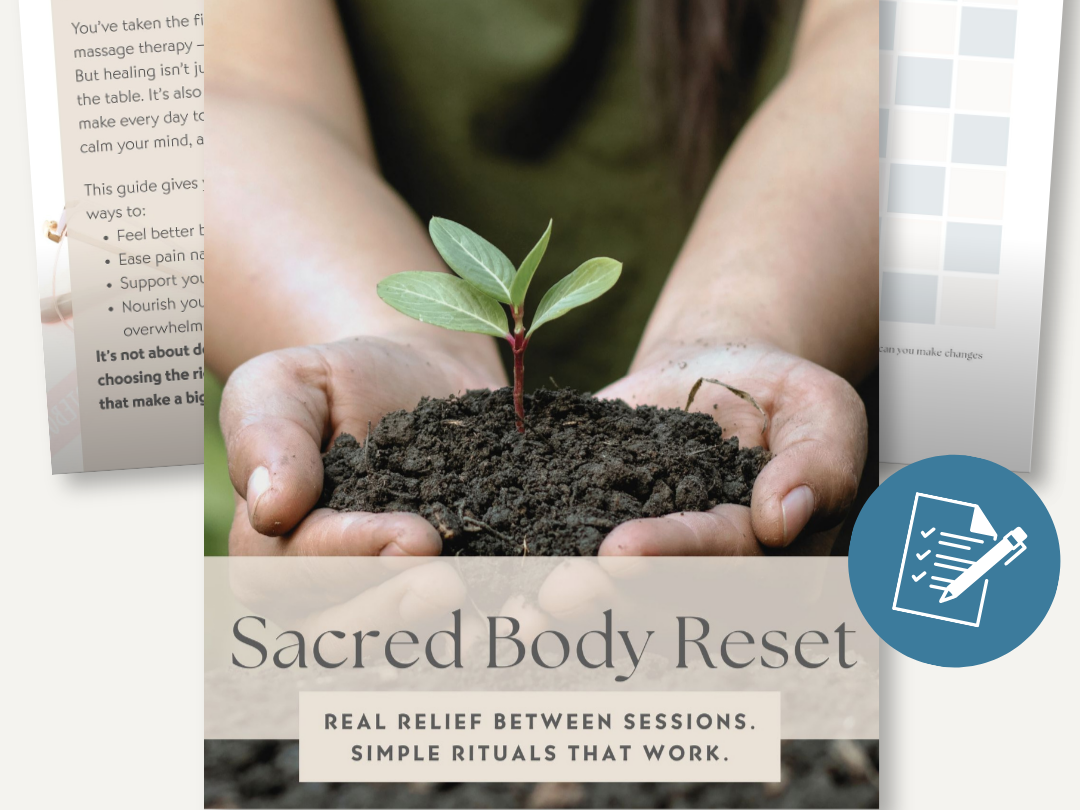
You’ve taken the first step by receiving massage therapy — and that’s powerful. But healing isn’t just what happens on the table. It’s also the tiny choices you make every day to support your body, calm your mind, and stay in flow.
This guide gives you simple, effective ways to:
Feel better between visits
Ease pain naturally
Support your nervous system
Nourish your body without overwhelm
It’s not about doing more — it’s about choosing the right things. Little shifts that make a big difference.
