

What Is Craniosacral Therapy?
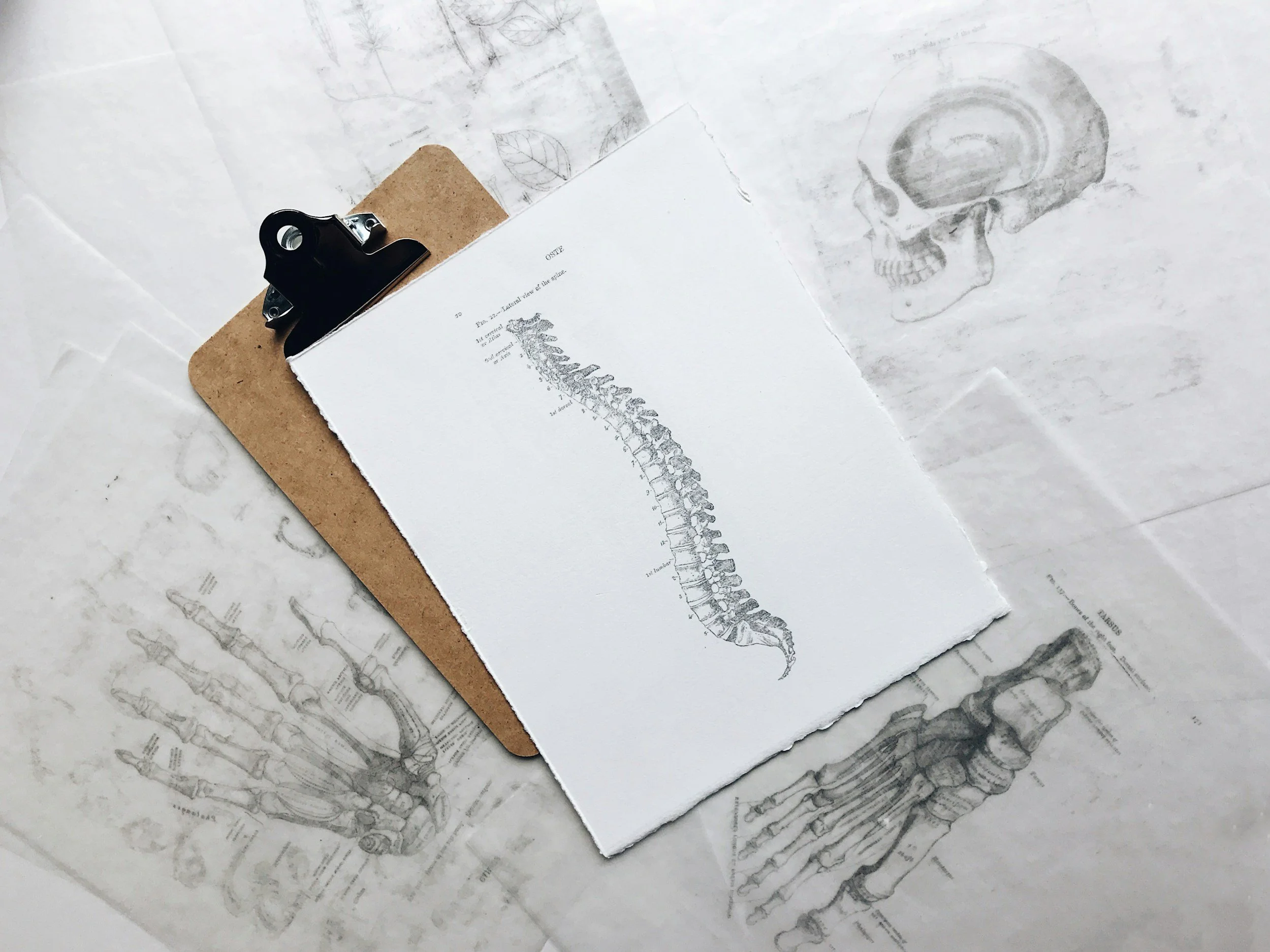
Dr. John Upledger was given the task of holding the spinal cord to the side while a surgeon removed a growth inside a vertebrae. The problem was that he couldn’t hold it still; it kept slipping out of his grasp. Comparing it to the heart and breathing rate during surgery it didn’t match either rhythm. Naturally he became curious, what is this rhythm?
Deep inside the brain cerebrospinal fluid is made. This fluid bathes the brain and spinal cord creating a rhythm. This is the source of the rhythm John felt during that surgery. Although many believe their skull is one solid bone it’s not. There are sutures between the cranial bones that allow for slight movement.
Using 5 grams of pressure, the weight of a nickel, I am able to tune into this rhythm and work with restrictions. Not just in the skull, between the occiput and sacrum, and also in the arms and legs. The craniosacral rhythm can be felt everywhere.
What Is A Craniosacral Session Like?
I always leave the session specifics to my clients. Typically craniosacral is given while the person remains fully clothed. Some people like to add a neck massage, especially if they have chronic headaches, so they might remove their shirt and/or bra. It’s your service and I’m simply here to help you as best as I can.
In the image below you can see squiggly lines behind the forehead, above the ear, and looking closely toward the back of the head. My fingers will gently rest on these bones feeling for their motion and restriction. Then my job is using light pressure to encourage them into the movement patterns I learned from the Upledger Institute.
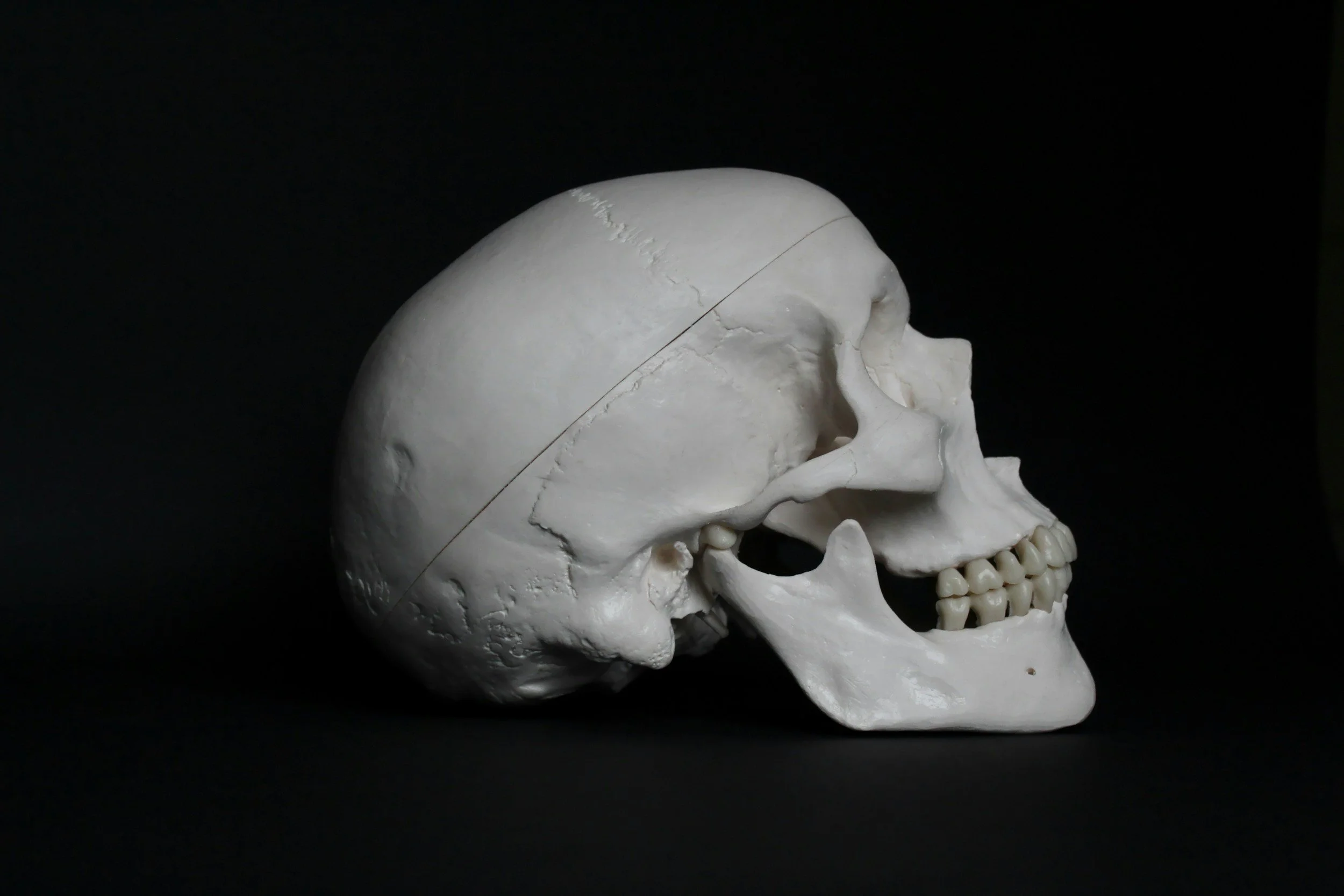
I’ve learned that more often than not when the bones of the skull aren’t moving properly there’s most likely a restriction in the sacrum. The pelvis is connected by cartilage at the pubic symphysis and also where the sacrum meets the posterior hip bones. Ideally there should be a rhythm between the base of the skull and the sacrum. Restrictions within the spinal column, head, and pelvis can disrupt this rhythm.
There are also multiple diaphragms where I’ll place one hand under you and rest the other gently on the front of your torso to release tension in the body cavity.
Does Craniosacral Work?
That’s an open ended question that really depends on how someone defines “work”. I’ve used craniosacral a lot on people who’ve been in car accidents that have daily headaches from their injuries. Many of them would tell you it’s helped them greatly.
When I’m working on someone signs I’ll look for are changes in breathing rate, eye movements, and sometimes an involuntary twitch. Just the other day working with a gal gently cradling her head in my hands trying to balance the craniosacral rhythm at the occiput she suddenly began to cry. She is a former Reiki practioner so she understood the emotional release, but it wasn’t until after the release of emotions that her rhythm normalized.
In the few years I’ve been doing this work she’s the first to cry so it’s not something that happens with everyone. Most people simply say they feel very relaxed sometimes stating it feels easier to breathe. Some people say they feel nothing afterwards but for me I always feel lots of things.
I’m always amazed by how such subtle pressure can have such a profound impact. Besides headaches I’ve also helped ease anxiety, balance the jaw in cases of TMJ, improved lower back pain and snoring, but mostly it’s a deeply relaxing experience for the receiver.
What Does The Science Say?
A 2024 study shows cerebrospinal fluid can reach the peripheral organs and nerves. [1] Meaning, I’m not just working with your brain and spinal column, but balancing the craniosacral system affects the entire body.
Occipitoatlantal decompression (OA-D) and transcutaneous auricular vagus nerve stimulation (taVNS), have been demonstrated to increase parasympathetic tone. By activating the parasympathetic nervous system they found a reduction in inflammation. [2]
Studies have also shown that craniosacral therapy is good for relieving neck pain. In this study the hypothesis the author makes is that it works by flushing the area of inflammatory cytokines, which goes back to my first two references above. [3]
The Upledger Military Veterans Post-Traumatic Stress Disorder (PTSD) Program was a fiveday Upledger CranioSacral Therapy Intensive Program that ran from Tuesday, November 8th through Sunday, November 13th 2016.
We found a 20-point drop (twice the minimal clinically important difference, MCID) in the PTSD Check List (PCL) for each of the four participants followed for five months after the Upledger CranioSacral Immersion Program. This result was both clinically and statistically significant.
Two of the three participants with a presumptive Post-Traumatic Stress Disorder (PTSD) diagnosis no longer had a presumptive diagnosis at the five-month follow-up. Depression as measured by the Patient Health Questionnaire (PHQ-9) also showed both clinically (MCID) and statistically significant changes. Although the Insomnia Severity Index (ISI) showed no statistically significant changes, three of the four veterans showed improvement in their ISI score at the five-month follow-up.[4]
In a 1973 study in the Journal of the American Osteopathic Association, Upledger reported on a standardized craniosacral exam he conducted on 203 grade school children. His contact was limited to the investigation of cranial mobility.
Students were classified by teachers and psychologists into physical and behavioral groupings. Overall the correlation between craniosacral motion and development problems in these children was extremely high.
The statistics showed a correlation between craniosacral restrictions and designations of “not-normal,” behavioral problems, learning disabilities, obstetric complications, and motor coordination problems. [5]
If you visit research links posted on the Upledger Institute’s website you’ll see links research linking improvements in asthma, fibromyalgia, epicondylitis, dementia, anxiety, depression, migraines, and even infertility. [6]
Incorporating Craniosacral Into Your Massage
I offer craniosacral therapy as one of my free add ons to any massage session. Whether you schedule 75, 90, or 120 minutes you can dictate how you want me to dedicate my time during your session. A purposeful reset is my signature 2 hour session that includes 90 minutes of massage with 30 minutes of craniosacral - again time dictated by you.
In my opinion 15 minutes is too short to get much done unless you’ve recently had craniosacral work done. An hour is a good place to start if you know you have a lot of restrictions and/or restrictions that have been there a long time. The craniosacral rhythm can be felt all over the body so even if you release easily I can continue to unwind your arms, legs and any other areas I feel tension.
[1] Xinyu Li, The periaxonal space as a conduit for cerebrospinal fluid flow to peripheral organs, Proceedings of The National Academy of Sciences (PNAS), September 20, 2024. https://doi.org/10.1073/pnas.2400024121
[2] Kania, Adrienne M., Weiler, Kailee N., Kurian, Angeline P., Opena, Marielle L., Orellana, Jennifer N. and Stauss, Harald M.. "Activation of the cholinergic antiinflammatory reflex by occipitoatlantal decompression and transcutaneous auricular vagus nerve stimulation" Journal of Osteopathic Medicine, vol. 121, no. 4, 2021, pp. 401-415. https://doi.org/10.1515/jom-2020-0071
[3] https://www.iahe.com/storage/docs/articles/NEW_CranioSacral_Research.pdf
[4] https://www.upledger.com/storage/docs/2016-CranioSacral-Immersion-Program-Results.pdf
[5] https://www.iahe.com/docs/articles/Article_-_MSU_Autism_Study.doc
[6] https://www.upledger.com/resources/articles
