

Table of Contents
What Craniosacral Therapy Actually Is (and Isn't)
The Craniosacral System and the Body's Natural Rhythm
Dr. John Upledger and the Fascial Connection
Craniosacral Therapy for Chronic Pain: What the Evidence Suggests
Craniosacral Therapy and Peripheral Nerves: The Emerging Research
What to Expect During Craniosacral Therapy
Craniosacral Therapy Session Length: How Long Is Enough?
Who Should Approach Craniosacral Therapy With Caution
Adding Craniosacral Therapy to Your Massage in Meridian
Frequently Asked Questions
What Craniosacral Therapy Actually Is (and Isn't)
Craniosacral therapy is a light-touch bodywork approach that works with the craniosacral system, the membranes and fluid surrounding the brain and spinal cord, to support the nervous system's own capacity for self-correction. Craniosacral therapy is also offered as a free add-on to any massage service, plus exclusive sessions where you remain fully clothed.
It is not a massage with lighter pressure and a new name. It is a distinct practice built on anatomy, trained listening hands, and patience. The therapist places hands gently on the skull, spine, and sacrum.
Our culture has trained people to expect force from bodywork. Deeper must be better, right? Craniosacral therapy asks the opposite question: what happens when you stop forcing and start listening?
The Craniosacral System and the Body's Natural Rhythm
The craniosacral system includes the cranial bones, the spine, the sacrum, and the membranes that surround the central nervous system. Practitioners describe a subtle rhythmic motion in this system.
This rhythm is not the heartbeat and not the breath. It is slower and more subtle, and learning to feel it takes practice.
Dr. John Upledger and the Fascial Connection
Dr. John Upledger, an osteopathic physician, developed the modern practice of CranioSacral Therapy in the 1970s and founded the Upledger Institute to teach it. His work built on earlier osteopathic research into the cranial concept.
The fascial connection matters here; all craniosacral techniques address the fascia. What is fascia? It’s the connective tissue found throughout the body covering muscles, blood vessels, organs, but ultimately it gives the body it’s tensegrity structure. (Fascia as a regulatory system in health and disease).
Craniosacral Therapy for Chronic Pain: What the Evidence Suggests
Here is an uncomfortable question for anyone shopping for bodywork: how would you know whether a treatment works? Most people answer with how they felt afterward. That is a real data point, but it is not the same thing as evidence, and the difference matters when you are deciding where to spend your time and money.
Craniosacral therapy for chronic pain sits in a genuinely mixed evidence space, and I think you deserve to hear that plainly rather than have it dressed up. That is not a reason to dismiss the work. It is a reason to hold it loosely and pay attention to your own response.
While I always feel things the person on the table may or may not. My theory is we live in a world of “no pain, no gain” and some are more sensitive than others. I’ve had clients report that they felt the same things I did, some have cried from the release, but typically I see eye movements, a sudden exhale, and occasional involuntary twitches. All of these things confirm to me that I’m doing something.
Why does the research produce mixed results? It could be the skill of the practitioner, the ability of the person on the table to notice a difference, or the design of the study.
I will say that if your pain is driven by a torn structure, a fracture, or an active disease process, no amount of gentle listening will substitute for medical evaluation.
So how should you weigh the design of a study? A few questions help:
Was the study controlled, and did it compare craniosacral therapy to something other than nothing?
How many people were in it, and how long did the follow-up last?
Did the authors measure pain, function, medication use, or just satisfaction?
Did the researchers have a financial or institutional stake in a positive or negative result?
That is the ancestral lens I keep coming back to: the body's default program is to heal itself, and your only job is to give it what it needs.
Key Takeaway: Reported experience and established clinical evidence are two different things. Both are useful. Knowing what to do with each is different, and that is where a conversation beats a search result.
If you have been told your pain is just something to manage, that explanation may be incomplete. Your experience is worth investigating, and better questions can lead to better understanding.
Craniosacral Therapy and Peripheral Nerves: The Emerging Research
Craniosacral therapy and peripheral nerves are an area of growing interest.
If you finished physical therapy and your back still hurts, that experience is worth investigating rather than accepting. Why does my back still hurt after physical therapy explores why persistent pain can linger and what a whole-person approach considers.
What to Expect During Craniosacral Therapy
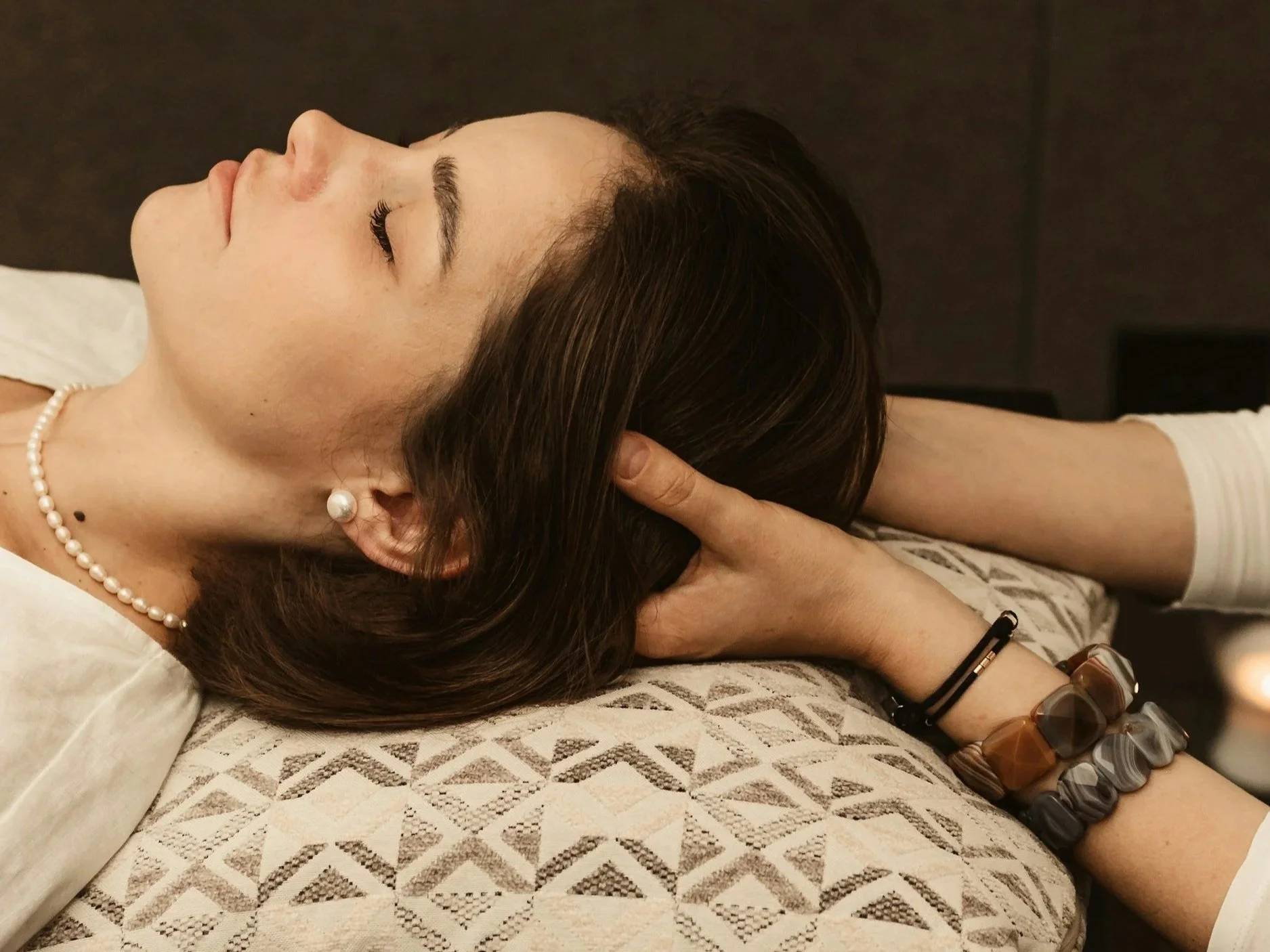
In an exclusive craniosacral session, you remain fully clothed. The therapist places hands lightly on areas such as the skull, spine, or sacrum.
If you want to understand the practice more deeply before trying it, what craniosacral therapy involves explains the foundations in plain terms. I offer craniosacral therapy in Meridian, Idaho. You can add craniosacral therapy to any massage session for free, you can schedule an exclusive craniosacral session, and I also offer a 2 hour Purposeful Reset combining both.
Craniosacral Therapy Session Length: How Long Is Enough?
Craniosacral therapy session length depends on your goal. I feel like 15 minutes isn’t much time to have a profound effect. At the 30 minute mark I feel like we’re getting somewhere, especially if the craniosacral rhythm is limited in the beginning. During a full hour session I’m able to branch out beyond the head and spinal column and address restrictions in the arms and legs.
When I designed my two-hour Purposeful Reset I initially thought of 90 minutes of massage and 30 minutes of craniosacral therapy, but your session can be customized for you. If you want 60 minutes of each, or 75 and 45, that’s ok too! You can schedule an appointment.
Who Should Approach Craniosacral Therapy With Caution
Gentle is not the same as risk-free, and I would rather you hear that from me than discover it after the fact. Craniosacral therapy is light-touch work, but light touch is still touch applied to a living system, and there are situations where a medical conversation should come before a table conversation.
A practical screening list looks something like this:
Recent head injury, concussion, or skull fracture, until cleared by the treating physician
Known intracranial aneurysm, shunt, or recent neurosurgery
Active cancer involving the brain, spine, or meninges
Uncontrolled seizure disorder or a recent change in neurological symptoms
Severe osteoporosis or known spinal instability
Recent stroke or transient ischemic attack
Acute infection, fever, or unexplained sudden headache
Pregnancy with any complication your obstetric provider is monitoring
This is not an exhaustive list, and it is not a diagnosis. It is a starting point for the conversation you should have with your physician before booking, especially if any of those items describe you or someone you care for. Light pressure is still pressure, and your medical history belongs in the room.
There is a scope-of-practice question underneath all of this that rarely gets said out loud. Craniosacral therapists are not diagnosing or treating disease, and no bodywork session should be framed as a substitute for medical care.
Watch Out: If you are experiencing sudden severe headache, vision changes, weakness on one side, difficulty speaking, or loss of consciousness, that is a medical emergency. Call 911 or go to the nearest emergency department. Do not wait for a bodywork appointment.
What I can offer is a careful, individualized set of hands and a willingness to ask whether this is the right tool for you right now. Sometimes the answer is yes. Sometimes the answer is that we start with something else, or that you go back to your physician with a better question than the one you arrived with. Craniosacral therapy does not diagnose or treat disease.
Adding Craniosacral Therapy to Your Massage in Meridian
I’ve been licensed by the Ohio State Medical Board to practice medical massage therapy since 2002. I believe the painful area is not always the only area worth investigating. Sometimes the nervous system is the missing piece, and sometimes it is not. The only way to know is to get curious about your own patterns.
If you have been told that feeling stiff and achy is simply part of aging, we would ask a different question. Maybe it's not your age. Your body is giving you information, and better questions can lead to better understanding.
Frequently Asked Questions
Is craniosacral therapy a sham?
Craniosacral therapy is a light-touch bodywork approach developed by osteopath Dr. John Upledger. Treat it as one tool in a broader investigation, not a cure-all.
How might craniosacral therapy affect peripheral nerves?
Recent research has examined how gentle craniosacral work may influence peripheral nerve function, with some studies measuring changes in nerve conduction and local tissue mobility after treatment. The fascial component matters here: nerves travel through and between fascial layers, so restrictions in that tissue can affect how a nerve glides and signals. The evidence is early and not conclusive, but it offers a plausible mechanical explanation for why some people notice changes in sensation, tingling, or referred discomfort.
Can you stay fully clothed during a craniosacral therapy session?
Yes. In an exclusive craniosacral session, you remain fully clothed. Craniosacral therapy is also available as a free add-on to any massage service.
How often should someone try craniosacral therapy?
Frequency depends on what you're addressing and how your body responds. Some people notice a shift after one session; others need several visits spaced a week or two apart to see whether a pattern changes. A reasonable approach is to try a small number of sessions, track what you notice in sleep, tension, headaches, or mobility, and reassess. If nothing changes after a fair trial, that information is useful too.
