From a Mashed Banana to a Garden: How Small Changes Changed the Way I Feed My Family
I didn't set out to become a gardener. I didn't grow up dreaming about vegetable beds or imagining that one day I'd help other families grow their own food. My journey toward gardening started in a much more ordinary place: my kitchen, when I was a new mom trying to figure out how to feed my baby well.
Someone once pointed out that instead of buying a jar of banana baby food, I could simply mash up a banana and feed it to my baby. It sounds almost silly to think about now. Of course I could mash a banana! But at the time, I hadn't really stopped to consider it. I was a new mom doing my best to give my baby what he needed, and I was surrounded by products promising to make that job easier. I trusted what I was seeing and buying because I thought that was what I was supposed to do.
That one little comment made me stop and think. Maybe I was making things more complicated than they needed to be. Maybe the answer wasn't always another product, another package, or another thing I needed to buy. Maybe sometimes the simplest option was right in front of me.
That was the beginning of a much bigger shift in the way I approached food.
One small change can lead to another
After that experience, I started learning how to make my own baby food. From there, I became more interested in cooking from scratch and finding ways to make better food for my family. The more I learned, the more questions I had. What was actually in the food I was buying? Where did the ingredients come from? Could I make this myself? Could I find a better ingredient, or a simpler way to prepare something we ate regularly?
I wasn't trying to become perfect. I was simply becoming more curious.
I think that's important, especially for anyone who has ever felt overwhelmed by all the advice surrounding health and wellness. It can seem like every time you turn around, there's something new you're supposed to be doing. Eat this, avoid that, buy this product, follow that routine. It doesn't take long for something that started with good intentions to feel like one more thing you're failing to do.
For me, the changes that lasted weren't the ones that required me to overhaul my entire life. They were the ones that started with a question and led to a small, practical change I could actually maintain.
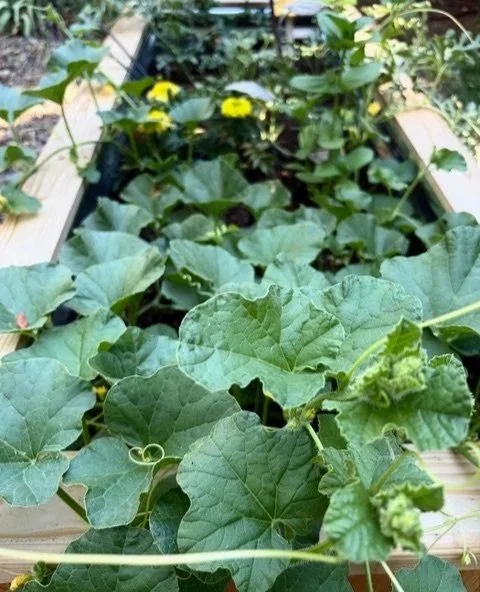
Making baby food led to cooking more from scratch. Cooking from scratch led to paying closer attention to ingredients. Paying attention to ingredients eventually led me to wonder whether I could grow some of them myself.
And that's where gardening entered the picture.
Knowing where your food comes from
There's something different about preparing a meal when you know where the ingredients came from. That feeling becomes even more meaningful when you've grown them yourself.
A tomato isn't just a tomato when you've watched the plant grow from a seed, watered it through the heat of summer, and waited for the fruit to ripen. A handful of herbs becomes something more when you've stepped outside to pick them moments before adding them to dinner. Food becomes connected to a process, a season, and the effort that went into producing it.
Gardening has given me another way to be intentional about what I bring into my kitchen. It has also helped me appreciate the work involved in producing food. Growing your own isn't necessarily easier than buying everything at the store, and it certainly doesn't mean every harvest will be successful. Plants get eaten by pests, weather doesn't always cooperate, and sometimes a vegetable you've carefully tended simply doesn't produce the way you hoped.
But there's a satisfaction in the process that goes beyond the harvest itself.
I also love that gardening encourages us to slow down and pay attention. You notice the changes in the weather, the first flowers on a tomato plant, the bees visiting your squash blossoms, and the way a garden can look completely different from one week to the next. There is always something to learn, and there is rarely a season when everything goes exactly as planned. For me, that is part of the appeal.
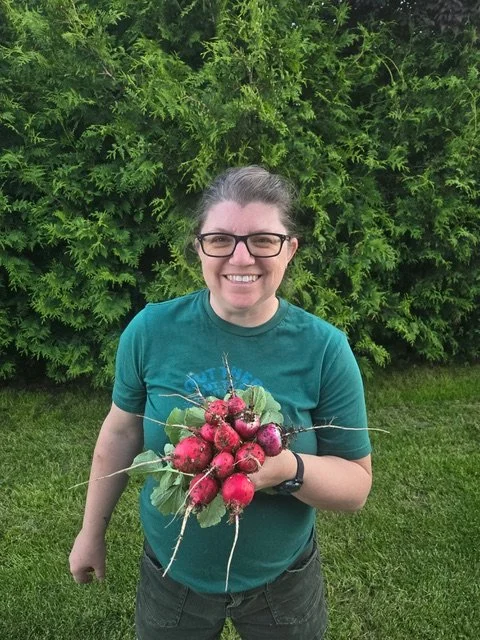
Gardening isn't about getting everything right.
It's about learning to work with what you have, paying attention, and trying again.
You don't need a farm to grow your own food
One of the things I want more people to understand is that growing food doesn't have to mean having acres of land, an elaborate homestead, or a backyard filled with raised beds.
You can grow food in a small backyard, in a few containers on a patio, or in a single garden bed. You can start with tomatoes and basil, a few lettuce plants, or something your family already enjoys eating. You don't have to grow everything you eat to benefit from growing something.
In fact, I think starting small is often the best way to begin.
It's easy to get excited about gardening and plan a space that requires more time, money, and attention than you realistically have. I've seen how quickly enthusiasm can turn into overwhelm when people feel they need to know everything before they plant their first seed.
You don't need to know everything. You need a place to start.
Think about what your family actually eats. If you go through tomatoes every week, perhaps those are worth growing. If your kids love picking peas straight from the plant, make room for peas. If fresh herbs would make cooking more enjoyable, start there. A garden should fit your life, not become another obligation that makes you feel behind.
And it doesn't have to be perfect to be worthwhile.
Your first garden might produce more zucchini than you know what to do with and hardly any carrots. You might discover that the variety you were excited about isn't one you want to grow again. You might learn that a particular spot in your yard gets too much afternoon heat or that you need a better plan for watering.
Those experiences aren't wasted effort. They're information you can use next season.
The goal isn't to create someone else's idea of a beautiful garden. It's to create a productive space that works for you and your family.
Helping families grow with confidence
That approach is what eventually led me to start Little Gate Gardens. I wanted to help other people experience the satisfaction of growing their own food without feeling like they needed to become gardening experts first. I especially enjoy helping beginners and families figure out how to make a vegetable garden work in the space they already have.
A garden doesn't need to be large or complicated to be substantial. It needs to be planned around the people who will use it, the food they enjoy, and the amount of time they can reasonably give it.
Sometimes that means figuring out how to arrange a few raised beds. Sometimes it means deciding what to plant when a space opens up after an early crop is finished. Sometimes it means troubleshooting a problem or helping someone decide what is worth growing again next year.
I want gardening to feel accessible, not intimidating.
I also believe that a garden should serve the people growing it. There's little value in filling a garden with vegetables your family won't eat or creating a space that demands more maintenance than you can manage. A successful garden is one that fits your needs, gives you something useful in return, and makes you want to keep growing.
You don't need to know every answer before you begin, and you don't have to figure it all out on your own. With a little planning, some patience, and a willingness to learn along the way, growing food at home can become a manageable part of everyday life.
Wellness doesn't have to be complicated
When I think about wellness, I don't necessarily think about making dramatic changes or following a long list of rules. I think about the small things we do repeatedly that shape our everyday lives.
For my family, that has meant learning to cook more from scratch, becoming more thoughtful about ingredients, and finding ways to grow some of our own food. Those choices won't look the same for every family, and I don't think they need to.
Maybe wellness for you means preparing dinner at home a few more nights each week. Maybe it means taking your kids outside and giving them something to care for. Maybe it means learning how to grow one vegetable you've always wanted to try. Or perhaps it's simply spending a little time in the garden after a busy day, without worrying about whether everything is growing exactly as it should.
A garden can offer all of those things, but it doesn't have to carry the weight of transforming your entire life. It can just be a garden.
I think we sometimes lose sight of how meaningful ordinary experiences can be. Planting a seed, picking a ripe tomato, washing vegetables at the kitchen sink, and preparing a meal with ingredients you've grown yourself are small things. But they connect us to our food in a way that can be easy to overlook when everything comes packaged and ready to use.
And when children are involved, those experiences can become even more valuable. Kids can see where food comes from, learn that plants need time and care, and discover that something they helped grow can become part of a meal. They might be more willing to try a vegetable they've watched develop for weeks. Even if they aren't, they've still had the experience of growing something and being part of the process.
There's no guarantee that every child will suddenly love vegetables because they grew them. There is, however, something worthwhile about inviting them into the experience.
Growing more than food
One of my favorite things about gardening is that it naturally creates opportunities to share.
A garden often produces more than one family can use at once. There might be extra tomatoes to give a neighbor, herbs to share with a friend, or vegetables to bring to a gathering. You start talking about what you're growing, swapping ideas, sharing recipes, and learning from other people who are doing the same thing.
Food has a way of bringing people together, and growing it can be part of that connection.
I love the idea of making homegrown food feel more normal and attainable, where families feel confident trying something new and people share what they've learned rather than feeling they have to figure everything out on their own.
We don't all need the same garden. We don't all need to grow the same vegetables or follow the same routines. But we can learn from one another, encourage one another, and make room for more people to experience the rewards of growing their own food.
Every garden is different because every household is different. Helping someone find a way to grow food that works for their particular space, family, and goals is much more rewarding to me than handing everyone the same plan and expecting it to fit.
Start with what you have
If there's one thing I'd like people to take away from my story, it's that you don't have to change everything at once.
My own journey began with something as simple as mashing a banana. I didn't know then that it would lead me to making baby food, cooking more from scratch, thinking differently about ingredients, and eventually building a business around helping people grow their own food.
I just took one small step, learned something, and followed my curiosity.
You can do the same with gardening. Start with one pot, one bed, or one vegetable. Learn what works in your space. Pay attention to what your family enjoys eating. Keep notes about what you planted, what you harvested, and what you want to do differently next year. Let the garden teach you as you go.
You don't need a perfect plan or a green thumb to begin. You just need a place to start and a willingness to learn.
For me, growing food has become another way to care for my family, be more intentional about what we eat, and create opportunities to share with the people around us. I hope to help other families discover what that can look like in their own lives, too.
Because sometimes the things that make the biggest difference don't begin with a big change. Sometimes they begin with a banana, a little curiosity, and the willingness to try something simple.
To learn more, visit: littlegategardens.com
You can follow along with my gardening work and ideas on Instagram at @littlegategardens.
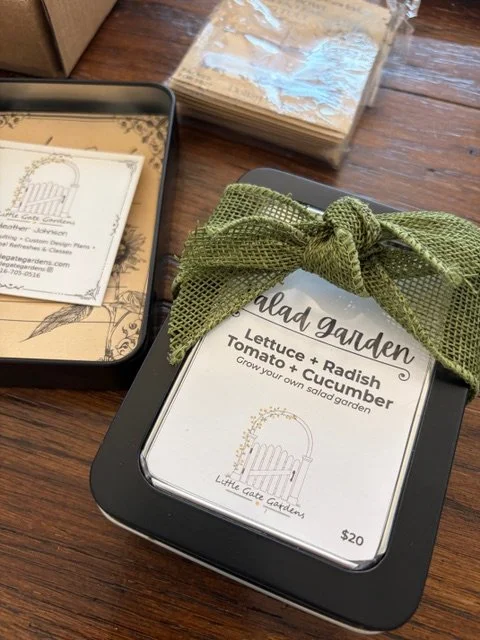
I also have some free resources and garden starter kits available on my website to help you begin growing your own food.