

Medical Massage for Arthritis Pain: What Actually Works
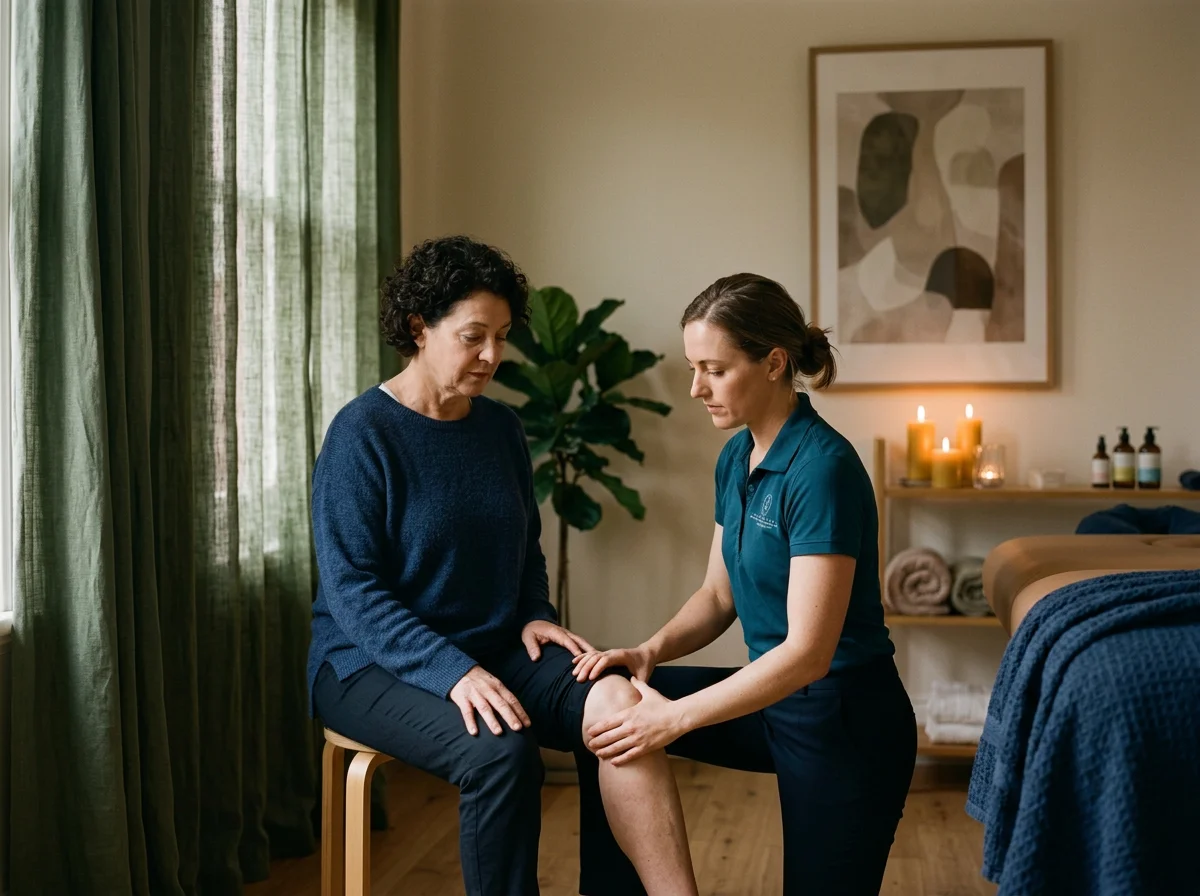
Table of Contents
Why Your Arthritis Pain Keeps Coming Back After Regular Massage
Medical Massage vs. Swedish Massage: The Difference That Matters
How Medical Massage Addresses Joint Pain and Soft Tissue Tension
Circulation, Inflammation, and Movement
The Role of Alignment in Chronic Joint Pain
What to Tell Your Massage Therapist Before a Session
Massage During an Arthritis Flare: Safety and Realistic Expectations
How Often Should Someone With Arthritis Get a Massage
Beyond the Table: Investigating Your Body's Communication
Conclusion
Frequently Asked Questions
Why Your Arthritis Pain Keeps Coming Back After Regular Massage
You get a massage. For two days, maybe three, you feel better. Then the stiffness returns. The ache creeps back in. You wonder if the relief was ever real or just temporary numbness.
This is the experience most people have with massage for arthritis pain. A Swedish spa massage feels good in the moment. The therapist uses long, flowing strokes designed to relax your muscles and calm your nervous system.
I see this pattern constantly. Clients arrive after trying general relaxation massage, expecting it to work differently this time. The problem isn't the massage itself, it's that the approach doesn't match what arthritis requires.
Medical massage for arthritis pain works differently. It targets the specific tension patterns, movement restrictions, and fascial limitations that come with joint inflammation. It asks: What's limiting your movement? Why does this joint feel stiff?
Pro Tip: The painful joint is rarely the only place that needs attention. Arthritis in your knee often involves tension up the chain, your hip, your lower back, even your ankle. A therapist trained in medical massage looks at the whole pattern, not just the spot that hurts.
Medical Massage vs. Swedish Massage: The Difference That Matters

Medical massage is a clinical approach to soft tissue work. It's designed to address specific musculoskeletal problems, like the joint pain, stiffness, and movement limitations that come with arthritis.
Swedish massage is relaxation-focused. The therapist uses long, gliding strokes to calm your nervous system and ease muscle tension. It feels wonderful. It reduces stress, but it doesn’t have much affect on structure and function.
Here's where the distinction matters for arthritis. When you have arthritis, your joints are inflamed. The soft tissue around them, muscles, tendons, fascia, tightens in response. That tightness limits your range of motion.
Jennifer's approach combines slow, purposeful strokes with attention to alignment and fascial restrictions. She waits for your body to respond rather than forcing her way in.
The difference shows up in how long relief lasts. Relaxation massage typically provides comfort for a day or two.
Key Takeaway: Medical massage targets the mechanical restrictions that arthritis creates. Swedish massage targets relaxation. For arthritis pain, you need someone looking at the actual problem, not just the feeling.
How Medical Massage Addresses Joint Pain and Soft Tissue Tension
When arthritis develops, it doesn't just happen in the joint. Your body responds by tightening the muscles around it. Your nervous system becomes protective. You move differently to avoid pain. All of these changes create a cascade of tension through your soft tissue.
Medical massage interrupts this cycle by releasing the tension patterns that keep your joint locked in a protective state. When soft tissue relaxes, your joint has more space to move. Movement becomes easier. Your nervous system receives the signal that it's safe to relax.
Circulation, Inflammation, and Movement
Inflammation is part of arthritis. Your immune system is responding to joint damage by flooding the area with inflammatory chemicals. That inflammation creates pain and stiffness. It limits how much you can move.
Movement itself is one of the most powerful tools you have. When you move, you pump fluid through your joints. You improve circulation. You signal to your body that the joint is functional, not broken. But arthritis pain makes movement feel risky.
Medical massage helps you move more comfortably by releasing the tension that's amplifying your pain. When the muscles around your joint aren't locked tight, moving feels less threatening. You can access more range of motion. Better movement means better circulation.
This is different from the relaxation you get from Swedish massage. You're not just feeling calmer. Your actual joint mechanics are improving.
The Role of Alignment in Chronic Joint Pain
Here's something most people don't understand about arthritis pain: the place that hurts is not always the place that needs attention. Your knee might be arthritic, but if your hip is tight and your ankle is restricted, your knee is working harder than it should.
A medical massage therapist trained in alignment looks at how your whole body is organized. Are your hips level?
Jennifer's background in Myoskeletal Alignment means she's looking at these patterns. She might find that your lower back is pulling your pelvis forward, which changes how your knee tracks.
This is investigative work. It requires understanding your body as an integrated system, not a collection of isolated parts.
What to Tell Your Massage Therapist Before a Session
Before your first massage appointment, your therapist needs to understand your situation. Not just where it hurts, but how it affects you.
Tell them:
Which joints are arthritic. Be specific. Knee, hip, shoulder, hands, neck, the location matters because it changes how the therapist approaches the work.
How long you've had arthritis. A recent diagnosis is different from something you've managed for ten years. Time changes the patterns that develop around the joint.
What movements are most limited. Can you not bend your knee fully? Does your shoulder not rotate? Does gripping hurt? These specifics tell your therapist what they're working toward restoring.
What makes it worse. Cold weather? Certain movements? Specific activities? Your body is giving you information. Share it.
What you've already tried. Physical therapy? Other massage? Anti-inflammatory medications? Your therapist needs to know what's worked and what hasn't.
How much pain you're in right now. Be honest about your baseline. If you're having a flare, your therapist needs to know. It changes what they can safely do.
Is it osteoarthritis or an autoimmune arthritis? The difference matters in long term care.
A good medical massage therapist will ask these questions. They're not trying to be thorough just to be nice. They're gathering information to understand your specific situation. Your experience is worth investigating.
Watch Out: If your therapist doesn't ask about your arthritis or your movement limitations, that's a signal they're not taking a medical approach. They're planning to give you a general relaxation massage. That's fine if that's what you want, but it's different from medical massage.
Massage During an Arthritis Flare: Safety and Realistic Expectations
An arthritis flare is when your joint suddenly becomes more painful and swollen. Your immune system is more active. The inflammation is higher. Your pain tolerance is lower.
Please Don’t Take An Anti-Inflammatory Before Your Massage Appointment
During a flare, you need to be cautious with massage. Aggressive pressure can aggravate inflammation. Deep tissue work might feel too intense.
The key is communication. Tell your therapist you're in a flare. Describe how the joint feels, is it hot? Swollen? Stiff? Your therapist can adjust their approach.
Some people find that gentle massage during a flare helps them move better and feel less protective. Others need to wait until the flare calms down.
What medical massage isn't: it's not a cure. It's not going to reverse arthritis. It's not going to eliminate inflammation.
Realistic expectations matter. If you expect one massage to solve arthritis pain, you'll be disappointed.
How Often Should Someone With Arthritis Get a Massage
This depends on several things: how severe your arthritis is, what else you're doing to address it, and how your body responds.
Some people benefit from more frequent sessions when they're first starting. This allows your therapist to build on what they learned in the previous session. Your body begins to hold the changes.
As you improve, you might move to less frequent sessions. Some people find that regular sessions keep them feeling good and moving well. Others need more frequent work.
The real question isn't "how often should I go" but "what frequency allows my body to actually change?" If you go every six weeks and feel no different, that frequency isn't working for you.
I help you figure this out. I watch how your body responds. I notice whether you're holding the improvements or reverting back.
Pro Tip: Pay attention to what happens between sessions. Do you feel better for a few days then return to baseline? That's information. Does the improvement last longer each time you come in? That's also information. Your body is telling you whether this is working.
Beyond the Table: Investigating Your Body's Communication
Here's what most people miss about arthritis pain: it's not just a joint problem. It's a signal that something about how you're living isn't compatible with your body's needs.
Maybe you're moving too little. Maybe you're moving in patterns that stress your joints. Maybe your sleep is poor and your body isn't recovering well. Maybe your food choices are creating inflammation.
Medical massage can help with the tension and movement restrictions. But lasting change requires investigating the bigger picture. Why is your body in pain? What information is it trying to give you?
Jennifer's background as a Certified Primal Health Coach means she looks at these broader questions. If you're interested in exploring these connections more deeply, health coaching can help you investigate what's actually driving your pain and what changes might matter for your individual situation.
This is why the educational resources matter. It's not enough to feel better after a massage.
The body's default program is to heal itself. Your only job is to give it what it needs. Sometimes what it needs is medical massage. Sometimes it's better sleep. Sometimes it's different movement.
Conclusion
Medical massage for arthritis pain isn't about temporary relief. It's about understanding what's restricting your movement and addressing it. It's about investigating why your body hurts and what you can do about it. It's about recognizing that the place that hurts is not always the place that needs attention.
If you've tried regular massage and found that the relief never lasts, it's worth exploring medical massage with someone trained to see your body as an integrated system. Someone who asks questions about your movement, your alignment, and your patterns. Someone who understands arthritis and knows how to work with it thoughtfully. Your experience is worth investigating.
Frequently Asked Questions
Can medical massage help with arthritis pain?
Medical massage addresses arthritis pain by improving circulation to affected joints, reducing muscle tension around arthritic areas, and restoring mobility through myofascial release and alignment work. Unlike relaxation massage, medical massage targets the soft tissue restrictions and movement patterns contributing to your pain. Results depend on your individual situation, how long you've had arthritis, and whether other factors like diet, sleep, or movement habits are also being investigated. Many people experience improved range of motion and reduced joint stiffness, though massage works best as part of a broader approach to understanding what your body is communicating.
How is medical massage different from a Swedish spa massage?
Swedish massage uses standardized techniques focused on relaxation and general stress relief, while medical massage is analytical and therapeutic. A medical massage therapist evaluates your specific movement restrictions, tension patterns, and the relationship between different areas of your body. Rather than following a routine, the therapist applies myofascial release, alignment corrections, and neurodynamic techniques tailored to your arthritis and how it's affecting your function. Medical massage also includes education about what's contributing to your pain, whereas spa massage is primarily about feeling good during the session.
What should I tell my massage therapist before a session?
Be specific about which joints hurt, when the pain started, what makes it better or worse, and whether you're currently experiencing a flare. Mention any other health conditions, medications, or recent injuries. Describe what activities are limited by your arthritis, can you reach overhead, climb stairs, or sleep comfortably? Tell your therapist if you've had massage before and whether it helped or made things worse. Share what you've already tried, including physical therapy or other treatments. The more detailed your description, the better your therapist can understand your individual situation and avoid approaches that might aggravate your condition.
Is massage safe during an arthritis flare?
During an active flare, gentle massage can sometimes help reduce pain and muscle guarding around the affected joint, but aggressive techniques can make inflammation worse. The safest approach is lighter pressure, shorter sessions, and focus on areas surrounding the inflamed joint rather than direct pressure on it. Some people find that waiting until the acute inflammation subsides is wiser. Communication with your therapist is essential, if you're in a flare, say so. Your therapist can adjust depth and duration accordingly. If you're unsure whether massage is appropriate for your current flare, it's worth checking with your doctor first.
If you're ready to investigate what's actually driving your arthritis pain and explore how medical massage combined with a broader understanding of your body could help, schedule a massage appointment with Jennifer. Jennifer's approach is to understand your specific situation, not apply a standard routine. She'll ask the questions that matter and help you recognize patterns you might have missed.

Your Body, Decoded
Your Body Isn't Broken. It May Just Need Something Different.
What if the stiffness, fatigue, cravings, aches, and changes you've been blaming on getting older are actually clues that your body needs a change?
You're 40+. Maybe 50+. Maybe 60+.
And somewhere along the way, you've started hearing the same explanation:
“That's just what happens as you age.”
Your joints hurt.
You're tired when you shouldn't be.
Your sleep isn't what it used to be.
Your weight doesn't respond the way it once did.
You have aches and pains that seem to have taken up permanent residence.
You've tried diets.
You've tried eating “healthy.”
You've probably tried exercising more.
And yet...
You don't feel healthy.
I'm here to tell you that getting older doesn't automatically mean you have to accept feeling older.
You Don't Need Another Diet.
You need someone who can help you make sense of the noise.
There is no shortage of nutrition advice.
Eat this.
Don't eat that.
Count this.
Track that.
Exercise more.
Eat less.
Ignore your cravings.
Try the newest superfood.
And if that doesn't work?
Apparently you just need more willpower.
I don't buy it.
My approach is different.
I don't hand you a meal plan and tell you what you're “allowed” to eat. I don't tell you to count calories or punish yourself with exercise.
Instead, I educate you.
I help you understand why your body may be responding the way it is, what influences your metabolism and hormones, and how nutrition, movement, sleep, stress, sunlight, recovery, and your daily environment work together.
My coaching is rooted in species-appropriate nutrition and lifestyle—not the latest diet trend and not a one-size-fits-all prescription.
Think of me as your translator.
The internet is full of information.
Some of it is excellent.
Some of it is outdated.
Some of it is sponsored by someone trying to sell you something.
And some of it is just... confidently wrong.
You shouldn't have to become a nutrition researcher just to figure out what to eat for breakfast.
That's where I come in.
I'll help you separate useful information from noise, understand the science behind the recommendations, and figure out which changes make sense for your goals and your life.
You remain in charge.
I provide the education, experience, perspective, and guidance.
I Don't Tell You What to Do.
I help you understand what your choices can do.
That's an important distinction.
You decide what you're willing to change.
You decide what matters to you.
You decide which habits you're ready to tackle.
My job is to help you understand the likely consequences of those choices, give you the information you need to make informed decisions, and help you troubleshoot when something isn't working.
No shame.
No food police.
No “you fell off the wagon.”
And definitely no starting over every Monday.
We're building something you can actually live with.
What We Look At
Your health doesn't happen in a vacuum.
Food matters—but it's not the only thing that matters.
Depending on your goals, we'll explore the lifestyle factors that can influence how you feel, including:
Nutrition and metabolic health
Blood sugar and cravings
Sleep and recovery
Stress and nervous-system load
Movement and strength
Daily activity—not just your workout
Sunlight and time outdoors
Circadian rhythms
Hydration and minerals
Your relationship with food
Habits that support long-term consistency
Because what you do for one hour at the gym doesn't erase what your body experiences during the other 23 hours of the day.
Your health is happening all day.
Let's work with all of it.
I've Seen What Can Happen When Someone Stops Accepting “This Is Just Aging.”
I've worked with people struggling with joint pain, autoimmune issues, weight, energy, mood, cravings, and the frustrating feeling that their body simply isn't cooperating anymore.
I've watched people in their 70s make significant changes in their pain and wellbeing through changes in food and lifestyle.
I've also worked with someone who had been through two failed back surgeries and was facing another surgery—but first needed to lose 50 pounds.
She was a single mother with two children, dealing with severe physical limitations and restrictions on what she could lift.
We changed the way she was eating.
She lost 50 pounds in five months—four months sooner than her doctor anticipated.
Later that year, she was able to have the surgery she needed.
Today, she's out racing bicycles.
That's not a promise of what will happen for you.
It's an example of what's possible when someone stops assuming that their current condition is the only condition available to them.
Your First Step Is Free.
Before you purchase a coaching package, we'll spend 30 minutes together at no cost to you.
This isn't a sales pitch disguised as a consultation.
It's an opportunity for us to talk.
I'll learn where you are now, what you've tried, what seemed to work, where things fell apart, what you're struggling with, and—most importantly—what you actually want to change.
We'll talk about whether coaching makes sense for you and what kind of support you may need.
If I believe I can help, I'll explain how.
If I don't think I'm the right person for you, I'll tell you that, too.
How Long Will You Need Me?
Some people need a little guidance.
Others have spent years trying to figure this out and need more time, education, troubleshooting, and support.
That's why I offer 4-, 8-, and 12-week coaching packages.
The principles don't change.
The amount of time you have to practice, learn, adapt, and build confidence does.
After our initial conversation, I'll help you determine which level of support makes the most sense for where you are right now.
This Isn't About Becoming Perfect.
It's about becoming less confused.
More capable.
More informed.
More connected to your own body.
And eventually, more independent.
My goal isn't to keep you dependent on me forever.
It's to teach you enough that you can make decisions with confidence long after our coaching relationship ends.
Because you shouldn't need a coach to tell you what to eat for the rest of your life.
You should understand your body well enough to make those decisions yourself.
If you're tired of being told that feeling lousy is simply part of getting older...
Let's talk.
Your first 30-minute consultation is free.
You may not need another diet.
You may not need another workout.
You may simply need someone who knows how to look at the whole picture.
What You’ll Get From Me:
20+ years of bodywork experience
Certified Primal Health Coach
Functional Lab Testing Specialist
More than a decade of studying nutrition and lifestyle
A very specific philosophy
Actual client outcomes
Experience working with women 40+
A framework that considers food + movement + sleep + stress + sunlight + recovery + lifestyle
The ability to explain why rather than simply handing people rules
Real-world experience seeing what happens when people implement these changes
And most importantly:
I've lived the experiment myself. My perspective isn't theoretical.
Payment plans available
Choose the option that works best for you.
Pay in full or divide your investment into convenient monthly installments.
Please note:Payment plans are installments toward the full coaching package and are not month-to-month memberships. By choosing a payment plan, you are committing to the full coaching package selected.
Health coaching provides education, mentoring, and lifestyle guidance. It does not diagnose or treat medical conditions or replace care from your physician or other qualified healthcare provider.
